 Image 1 of 1
Boy Public and Private Body Parts – Social Visual Guide
€8.99
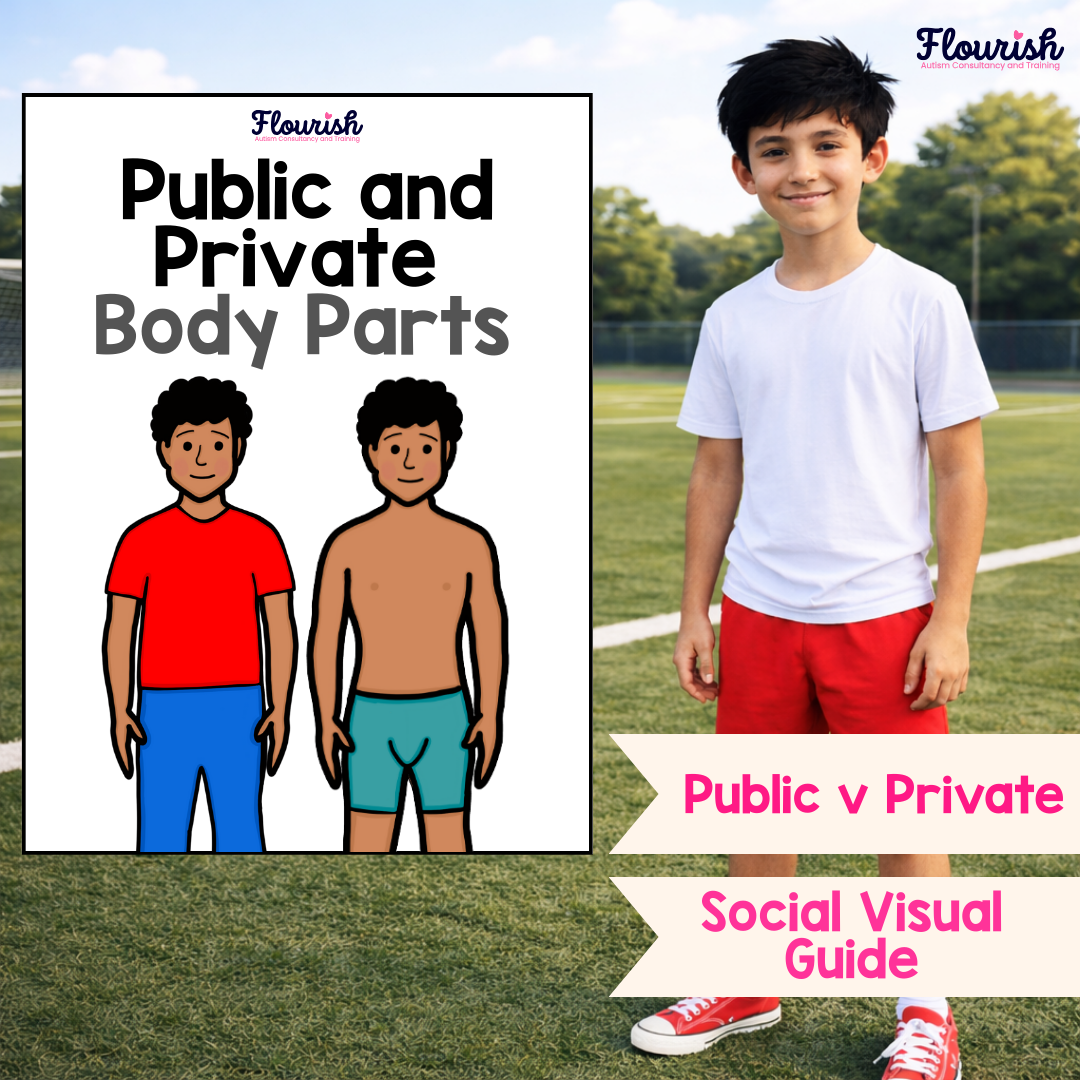
This 11 page Public and Private Body Parts Social Visual Guide (Boy) is a structured, visual-based resource designed to support Autistic and neurodivergent children in understanding body ownership, privacy, and personal boundaries in a calm, factual, and developmentally respectful way.
Created by Amanda McGuinness of Flourish Autism, this guide reflects a neuroaffirmative, trauma-informed approach that prioritises autonomy, clarity, and emotional safety. It is particularly supportive for children who benefit from explicit visual explanations, reduced language load, and consistent messaging around consent and bodily boundaries.
The guide uses simple, direct statements paired with clear visuals to explain which body parts are private, which are public, and who is allowed to see or touch them. It avoids fear-based language and instead focuses on empowerment, self-ownership, and personal rights.
A clear explanation of private body parts, including chest, penis, and bottom
Visual clarification of public body parts that are visible outside clothing
Explicit teaching that private body parts belong to the individual
Visuals showing that underwear covers private parts
Direct statements reinforcing body ownership and autonomy
Clear boundaries about who is allowed to see or touch private body parts
A simple explanation of mouth and tongue boundaries
Consistent, uncluttered visuals designed to reduce cognitive overload
Body awareness and body autonomy
Understanding privacy and personal boundaries
Early consent and self-advocacy concepts
Safety awareness in a non-threatening way
Comprehension of social expectations related to clothing and privacy
Confidence in understanding “my body belongs to me”
Autistic and neurodivergent children
Children who benefit from visual learning
Families supporting personal safety education at home
Schools and special education settings
SNAs, teachers, and support staff
Professionals seeking neuroaffirmative body safety resources
PLEASE Note:
This digital resource after purchase will be made available to download for 24 hours only. Please download within the stipulated timeframe to access your resource.
This 11 page Public and Private Body Parts Social Visual Guide (Boy) is a structured, visual-based resource designed to support Autistic and neurodivergent children in understanding body ownership, privacy, and personal boundaries in a calm, factual, and developmentally respectful way.
Created by Amanda McGuinness of Flourish Autism, this guide reflects a neuroaffirmative, trauma-informed approach that prioritises autonomy, clarity, and emotional safety. It is particularly supportive for children who benefit from explicit visual explanations, reduced language load, and consistent messaging around consent and bodily boundaries.
The guide uses simple, direct statements paired with clear visuals to explain which body parts are private, which are public, and who is allowed to see or touch them. It avoids fear-based language and instead focuses on empowerment, self-ownership, and personal rights.
A clear explanation of private body parts, including chest, penis, and bottom
Visual clarification of public body parts that are visible outside clothing
Explicit teaching that private body parts belong to the individual
Visuals showing that underwear covers private parts
Direct statements reinforcing body ownership and autonomy
Clear boundaries about who is allowed to see or touch private body parts
A simple explanation of mouth and tongue boundaries
Consistent, uncluttered visuals designed to reduce cognitive overload
Body awareness and body autonomy
Understanding privacy and personal boundaries
Early consent and self-advocacy concepts
Safety awareness in a non-threatening way
Comprehension of social expectations related to clothing and privacy
Confidence in understanding “my body belongs to me”
Autistic and neurodivergent children
Children who benefit from visual learning
Families supporting personal safety education at home
Schools and special education settings
SNAs, teachers, and support staff
Professionals seeking neuroaffirmative body safety resources
PLEASE Note:
This digital resource after purchase will be made available to download for 24 hours only. Please download within the stipulated timeframe to access your resource.