 Image 1 of 1
A Neuroaffirmative Social Visual Guide for Autistic Children
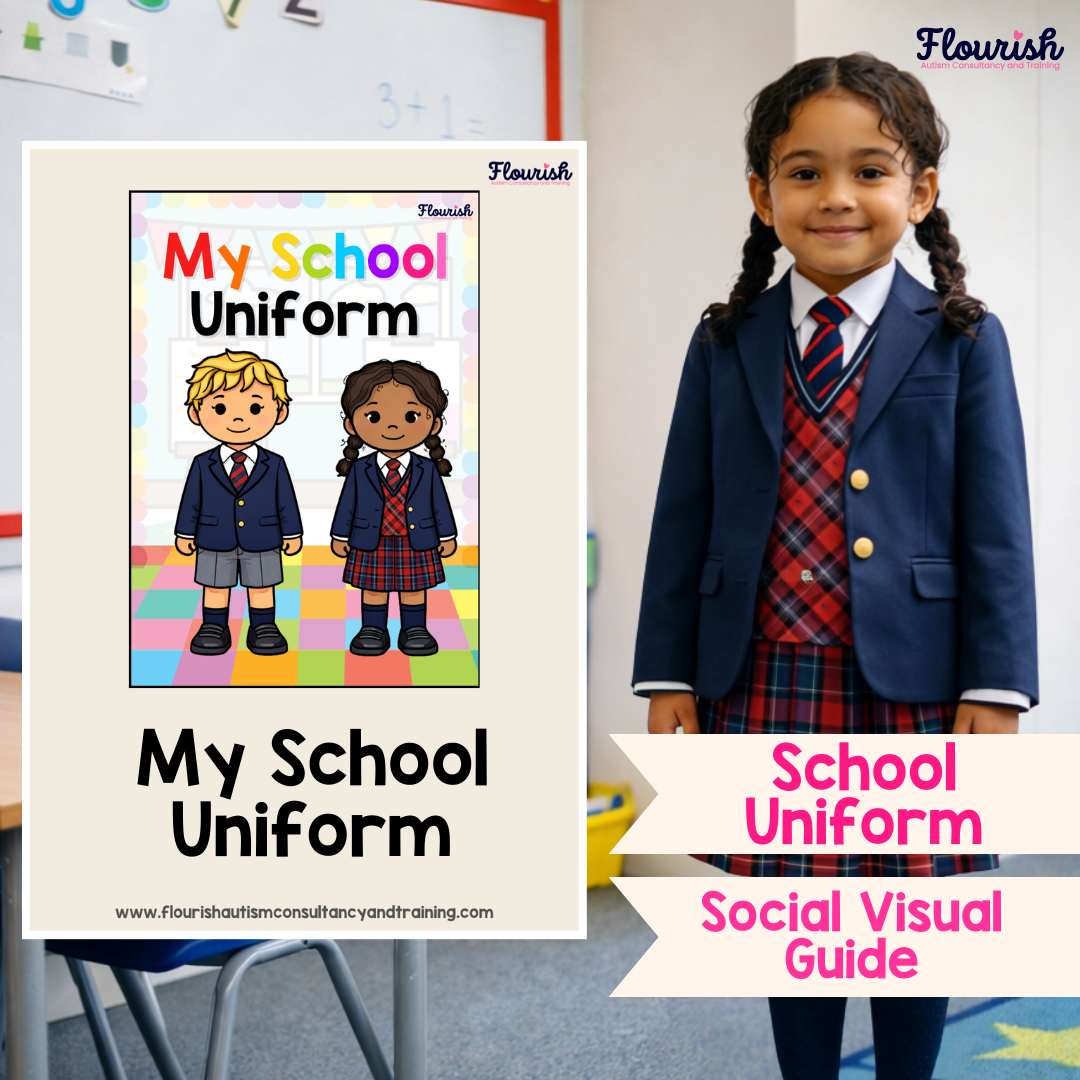
My School Uniform is a clear, reassuring social visual guide designed to support Autistic children in understanding school uniforms, when they are worn, and when they are not. Using consistent visuals, simple declarative language, and predictable structure, this resource reduces uncertainty around school clothing expectations and supports emotional regulation during school transitions.
This guide gently explains key concepts such as wearing a uniform at school, changing out of uniform at home, and understanding that different classes may have different uniform requirements. It avoids compliance-based language and instead focuses on clarity, predictability, and shared understanding, making it particularly supportive for Autistic children who experience anxiety around routines, transitions, or sensory aspects of clothing.
The visuals feature diverse children, familiar environments such as home and school, and consistent uniform imagery to support visual processing and meaning-making. The language is concrete, affirming, and accessible, supporting comprehension without pressure or behavioural expectation.
A 8 page social visual guide in PDF format
Clear visual contrasts between school and home clothing
Simple, declarative sentences paired with supportive illustrations
Inclusive representation and neutral, affirming tone
Autistic children who attend schools with uniform requirements
Families supporting school transitions
Teachers, SNAs, and school staff
Therapists and professionals using neuroaffirmative approaches
Inclusive early years and primary settings
A Neuroaffirmative Social Visual Guide for Autistic Children
My School Uniform is a clear, reassuring social visual guide designed to support Autistic children in understanding school uniforms, when they are worn, and when they are not. Using consistent visuals, simple declarative language, and predictable structure, this resource reduces uncertainty around school clothing expectations and supports emotional regulation during school transitions.
This guide gently explains key concepts such as wearing a uniform at school, changing out of uniform at home, and understanding that different classes may have different uniform requirements. It avoids compliance-based language and instead focuses on clarity, predictability, and shared understanding, making it particularly supportive for Autistic children who experience anxiety around routines, transitions, or sensory aspects of clothing.
The visuals feature diverse children, familiar environments such as home and school, and consistent uniform imagery to support visual processing and meaning-making. The language is concrete, affirming, and accessible, supporting comprehension without pressure or behavioural expectation.
A 8 page social visual guide in PDF format
Clear visual contrasts between school and home clothing
Simple, declarative sentences paired with supportive illustrations
Inclusive representation and neutral, affirming tone
Autistic children who attend schools with uniform requirements
Families supporting school transitions
Teachers, SNAs, and school staff
Therapists and professionals using neuroaffirmative approaches
Inclusive early years and primary settings